Swift Code vs Routing Number: What You Really Need to Know
Personal Finance
01 October 2025
DNBC Team
This article is a part of DNBCGroup Blog Center
Contact DNBCGroup for the technology news, tips, trends, and updates.
Ever tried sending money and felt like you were suddenly asked to solve a secret code? You’re not alone. The financial world loves its codes, and two that often trip people up are the SWIFT code and the routing number. Both look important (and they are), but they serve different purposes. Understanding the difference between them can save you headaches, failed transfers, and those mysterious bank fees that make you wonder if someone accidentally charged you for a vacation you didn’t take.
So, let’s dive into the world of swift code vs routing number—with a dash of humor to keep things light—and see how DNBC can help make your transfers simple and stress-free.
What is a SWIFT Code?
A SWIFT code (short for Society for Worldwide Interbank Financial Telecommunication) is like the international ID card for banks. It’s the code that tells the world exactly which bank you’re trying to send money to, whether it’s in Tokyo, Paris, or New York.
- Structure: A SWIFT code is usually 8–11 characters long. It’s a mix of letters and numbers that tell you the bank, country, location, and sometimes even the specific branch.
- Purpose: It’s used for international wire transfers. Think of it as a standardized messaging system between banks that tells them where to send your money — not the rails that actually move the funds.
- Example: BOFAUS3NXXX (for Bank of America, New York).
Whenever you’re sending money abroad, chances are your bank will ask for the recipient’s SWIFT code. And if you open an account at DNBC, you’ll see how seamlessly this process works—we’ve designed our system to make international payments as easy as sending a text.
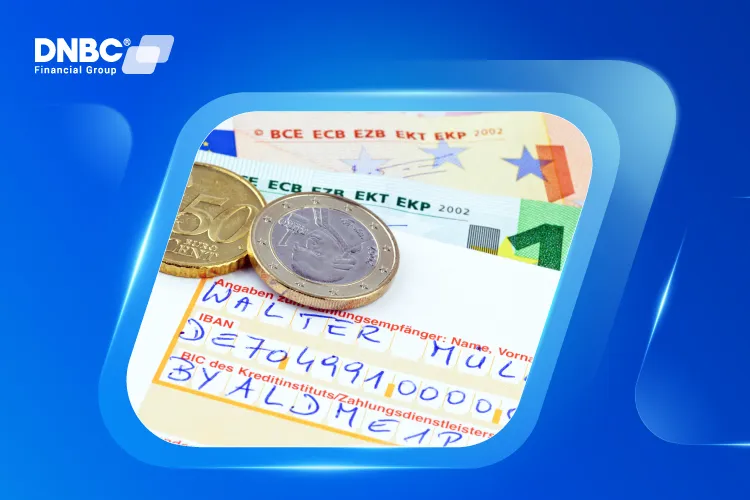
What is a Routing Number?
Now, let’s hop back to the U.S. If SWIFT codes are for the globe, routing numbers are strictly American.
- Definition: A routing number is a 9-digit code assigned by the American Bankers Association (ABA).
- Purpose: It helps identify banks for domestic transfers within the U.S.—things like payroll, direct deposit, bill payments, or moving money between accounts.
- Where to Find It: If you’ve ever looked at the bottom of a check, the first set of numbers is your routing number. (The second is your account number, and no, you shouldn’t post those on Instagram.)
So, while SWIFT codes are the passport for money traveling internationally, routing numbers are the local driver’s license for U.S. transactions. With DNBC, you don’t need to stress about mixing them up—we provide guidance so you always know which code to use.
Note: Some U.S. banks use different routing numbers for ACH and for wire transfers, so always check which one to use before sending.

Swift Code vs Routing Number: Key Differences
Here’s where it gets fun—comparing the two.
Structure
- SWIFT: 8–11 alphanumeric characters.
- Routing: Always 9 digits, numbers only.
Usage
- SWIFT: For international transactions.
- Routing: For domestic U.S. transactions.
Issuer
- SWIFT: Issued by the SWIFT network.
- Routing: Assigned by the ABA.
Geography
- SWIFT: Global.
- Routing: U.S. only.
In short, when it comes to swift code vs routing number, the biggest difference is whether you’re sending money across the street or across the ocean. And with DNBC, you can handle both with ease—no need to worry about codes tripping you up.

When Do You Use Each?
Think of it like this:
- If you’re paying rent in New York → you’ll need the routing number.
- If you’re sending money to a supplier in Singapore → you’ll need the SWIFT code.
Simple, right? Except that many people try to use a routing number for international transfers. Spoiler alert: it won’t work. Your money might bounce back, and nobody enjoys paying return-to-sender fees on cash. With DNBC, our system guides you to enter the right information so that transfers are completed smoothly the first time. In some countries, you may also need a local bank code (like IFSC in India or Transit Number in Canada) in addition to or instead of a SWIFT code.
How to Find Them
- SWIFT Code: You can usually find this on your bank’s website, statements, or by calling customer service. Or just ask DNBC—we’ll happily provide the details you need.
- Routing Number: Look at your checkbook, log into online banking, or use the ABA’s routing number directory.
Both are easy to locate once you know where to look.
Common Mistakes to Avoid
- Mixing them up: Using a routing number instead of a SWIFT code for an international transfer is like trying to call London with your local taxi’s phone number.
- Copying errors: One wrong digit and your transfer might end up in limbo.
- Assuming one size fits all: Some banks have multiple SWIFT codes or routing numbers depending on the transaction type.
To avoid these headaches, open an account with DNBC. We walk you through every step and make sure you use the right details, so your money goes exactly where it should.
Swift Code vs Routing Number: Quick Comparison Table
Feature | SWIFT Code | Routing Number |
Usage | International | Domestic (U.S.) |
Structure | 8–11 characters | 9 digits |
Issuer | SWIFT network | American Bankers Association |
Example | BOFAUS3NXXX | 021000021 |
See? Side by side, the swift code vs routing number debate becomes crystal clear.
Why This Matters for Cross-Border Payments
Here’s the thing: the financial system doesn’t forgive sloppy mistakes. If you use the wrong code, your transfer may get delayed, rejected, or even lost in the financial Bermuda Triangle. That means wasted time, lost money, and possibly some very awkward phone calls.
That’s why DNBC is here. With our international payment solutions, you don’t have to stress about whether you’re using the right code—we’ll make sure everything is correct. Plus, you’ll enjoy competitive fees and multi-currency support, which means more of your money goes where it’s supposed to.
Conclusion
So, what have we learned from our friendly showdown of swift code vs routing number?
- SWIFT = international transfers.
- Routing = domestic U.S. transactions.
- Mixing them up can cause delays and fees.
- With DNBC, you can avoid the confusion and make transfers smooth and simple.
At the end of the day, these codes are like the secret handshakes of the banking world. They may seem confusing at first, but once you get the hang of them, they’re surprisingly straightforward. And hey, if you want to skip the stress entirely, just open an account at DNBC—we’ll handle the tricky stuff so you can focus on what really matters.
FAQs About Swift Code vs Routing Number
Is a SWIFT code the same as a routing number?
Nope! SWIFT codes are for global transfers, routing numbers are for U.S. domestic transfers.
Do I need both for international transfers?
Usually, you’ll need the SWIFT code and sometimes additional details like the IBAN. DNBC makes sure you always know exactly what’s required.
What happens if I use the wrong routing number?
Your transfer may fail, get delayed, or bounce back. Double-check before sending—or let DNBC check for you.
Can I transfer money internationally without a SWIFT code?
In most cases, yes — but for euro transfers within the SEPA zone, only an IBAN is needed because banks can automatically identify the BIC/SWIFT code. DNBC provides all the details you need to make sure your transfers are hassle-free.
Your Trusted Partner
In your Digital
Journey
Free 1 - on -1 support
Free account opening fees
No hidden fees

Note: The content in this article is for general informative purposes only. You should conduct your own research or ask for specialist advice before making any financial decisions. All information in this article is current as of the date of publication, and DNBC Financial Group reserves the right to modify, add, or remove any information. We don’t provide any express or implied representations, warranties, or guarantees regarding the accuracy, completeness, or currency of the content within this publication.
Related posts

Important Update: Notice regarding mandatory annual account reviews and compliance fees.
28 February 2026
Difference Between Transit Code and SWIFT Code: Explained Simply
01 October 2025
How to Use a Transit Code for Smooth Transfers
01 October 2025

What Happens If Someone Has Your BSB and Account Number?
01 October 2025

Sending Money from Australia to New Zealand: A Complete Guide
01 October 2025