Routing Number, IBAN and SWIFT Code: The ABCs of Money on the Move
Personal Finance
08 September 2025
DNBC Team
This article is a part of DNBCGroup Blog Center
Contact DNBCGroup for the technology news, tips, trends, and updates.
Ever tried sending money abroad and felt like you were decoding a spy message? Between numbers, codes, and acronyms, it can feel like you’re applying for entry into a secret club. But don’t worry—today we’re talking about Routing Number, IBAN and SWIFT Code in plain, everyday language. And yes, we’ll even sprinkle in a little humor along the way.
If you’re looking for a reliable way to make transfers without getting tangled in banking jargon, opening an account at DNBC can make the whole process feel like a walk in the park… a park where your money actually gets where it’s supposed to go.

What Exactly Is a Routing Number?
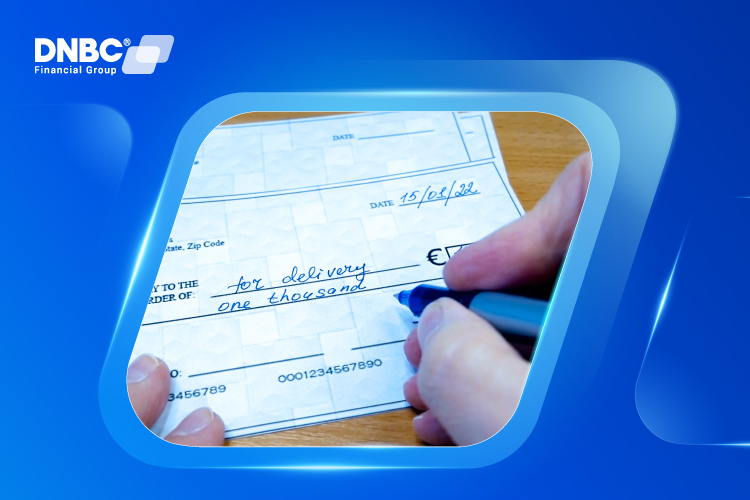
A routing number is like your bank’s home address. In the U.S., it’s a nine-digit code that tells other banks exactly where your account lives. It’s mainly used for domestic transactions—think direct deposits, bill payments, or wiring money to a friend across the state.
You can usually find it at the bottom of your check (yes, some people still use those), on your bank’s website, or in your online banking portal. Just make sure you don’t mix it up with your account number. That’s like sending your holiday postcard to the street name but forgetting the house number.
IBAN: Your Passport for International Payments
If the routing number is a local address, the IBAN (International Bank Account Number) is your full international address—zip code and all. Used primarily in Europe, the Middle East, and other regions, IBAN helps make sure your money doesn’t take an accidental detour to another country.
It’s longer than a routing number because it includes your country code, a couple of check digits, and the rest of your bank and account info. For example, “GB29 NWBK 6016 1331 9268 19” might look like something from The Matrix, but it’s really just someone’s bank account formatted for global travel.
SWIFT Code: The Air Traffic Control of Banking
And then we have the SWIFT code—no, it’s not a new Taylor Swift album. The SWIFT (Society for Worldwide Interbank Financial Telecommunication) code is like an airport code for banks. It tells other banks exactly which bank should receive your money, and in which country.
It’s usually 8 or 11 characters long, and each part has a specific meaning—bank code, country code, location code, and branch code. Without it, your international money transfer is like sending a paper airplane into the wind and hoping it lands in Paris.
With DNBC, you can rest easy knowing your SWIFT code is always on hand and correct—because nothing says “trustworthy” like your money arriving exactly where it’s supposed to.
Routing Number vs IBAN vs SWIFT Code: What’s the Difference?
Here’s a quick cheat sheet:
Criteria | Routing Number | IBAN | SWIFT/BIC Code |
Region of Use | United States | Europe and countries applying the IBAN standard | Worldwide |
Structure | 9 digits | Up to 34 alphanumeric characters | 8 or 11 alphanumeric characters |
Meaning | Identifies the bank or financial institution in the U.S. for domestic transactions | Identifies the country, bank, and recipient’s account in international transactions | Identifies the bank and branch in the international banking system |
Used For | Domestic transactions in the U.S. (ACH, checks, wire transfers) | International transactions (SEPA, SWIFT, etc.) | International transactions via the SWIFT network |
Combined With | Domestic account number | SWIFT code (sometimes) | IBAN or bank account number |
Example | 021000021 (JPMorgan Chase Bank) | GB29 NWBK 6016 1331 9268 19 (UK) | DEUTDEFF (Deutsche Bank, Germany) |
Think of them as travel tools for your money: the routing number is a city bus, IBAN is your international flight ticket, and SWIFT code is the control tower making sure you don’t end up in the wrong city.
How They Work Together in Transfers
Sometimes you’ll need just one code. Sometimes you’ll need all three. For example:
- Sending money within the U.S.? Routing number + account number = success.
- Sending money to Europe? In most cases, an IBAN is enough within the SEPA zone, though some banks outside SEPA may still ask for both IBAN and SWIFT.
- Sending money abroad? Depending on the country, you’ll usually need an IBAN and a SWIFT code. In the U.S., a routing number and account number are used for domestic transfers only, not for international ones. You won’t normally be asked for all three at once.
Finding Your Codes Without Losing Your Sanity
- Routing Number: On checks, online banking, or call your bank.
- IBAN: Usually displayed in your online banking profile or can be generated from your account details.
- SWIFT Code: Found on your bank’s website or via customer support.
Common Mistakes People Make
- Mixing up IBAN and SWIFT: One is your account’s full address, the other is the bank’s ID.
- Using a routing number for international transfers: Like trying to use a bus pass for a flight—it’s not going to work.
- Guessing codes: Never guess. Unless you enjoy sending your money on a world tour without a return ticket.
Why Getting It Right Matters
Money transfers aren’t just about numbers—they’re about trust, speed, and accuracy. A single wrong digit can delay your payment or send it somewhere you didn’t intend. That’s why having your Routing Number, IBAN and SWIFT Code correct is crucial.
DNBC ensures your details are always accurate, secure, and easy to access—so you can spend more time doing what matters, like planning your next trip or finally trying that new café.
The DNBC Advantage
When you open an account with DNBC, you get:
- you get easy access to your IBAN and SWIFT code—so you can make and receive international transfers without hassle.
- Multi-currency accounts for international flexibility.
- Secure online platform with 24/7 access.
- Dedicated support that explains things in plain English (and maybe even with a smile).
Why juggle multiple banks, apps, and paper notes with random numbers when DNBC gives you a one-stop solution?
Final Thoughts
Understanding your Routing Number, IBAN and SWIFT Code doesn’t have to be a brain-bending exercise. Think of them as your money’s travel documents—just get them right, and the journey will be smooth.
And if you’d rather someone else handle the heavy lifting while you enjoy life, opening an account at DNBC is the way to go. You bring the coffee, we’ll bring the clear, secure, and speedy transfers.
Your Trusted Partner
In your Digital
Journey
Free 1 - on -1 support
Free account opening fees
No hidden fees

Note: The content in this article is for general informative purposes only. You should conduct your own research or ask for specialist advice before making any financial decisions. All information in this article is current as of the date of publication, and DNBC Financial Group reserves the right to modify, add, or remove any information. We don’t provide any express or implied representations, warranties, or guarantees regarding the accuracy, completeness, or currency of the content within this publication.
Related posts

Important Update: Notice regarding mandatory annual account reviews and compliance fees.
28 February 2026
Difference Between Transit Code and SWIFT Code: Explained Simply
01 October 2025
Swift Code vs Routing Number: What You Really Need to Know
01 October 2025
How to Use a Transit Code for Smooth Transfers
01 October 2025

What Happens If Someone Has Your BSB and Account Number?
01 October 2025